Though the Human Rights Commissions have contributed immensely to the protection of human rights in India, yet they have failed to assert themselves against the mighty and powerful. Analyzing their structural and practical limitations, suggest remedial measures. (UPSC 2021)
Human Rights Commissions in India have expanded accountability through suo motu action, compensation recommendations and reforms in prisons, custodial violence, bonded labour, manual scavenging and acid-attack rehabilitation. Yet their impact is weaker when violations involve the State, police or other powerful actors.
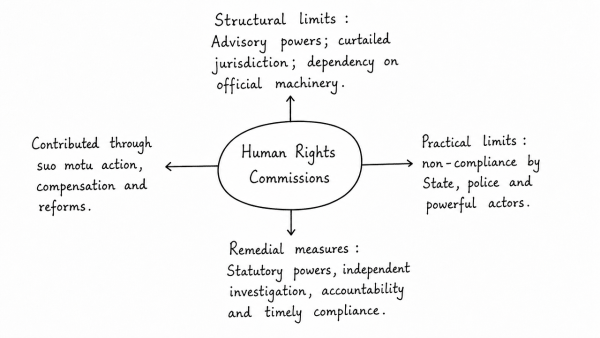
Structural limits: Their recommendations are largely advisory, so authorities may delay or ignore compliance. Inquiries often depend on police or official machinery, undermining neutrality in cases like custodial abuse or fake encounters. Jurisdiction is curtailed in matters involving armed forces, while the one-year complaint bar and limited reach over private actors exclude many victims. State commissions also face vacancies, poor staffing, inadequate funds and weak field presence.
Practical constraints: Executive-dominated appointments, low diversity, poor follow-up, and limited public awareness have created the image of a “toothless tiger,” especially against influential violators.
Remedial measures: Make key recommendations time-bound with reasons for rejection and penalties for non-compliance; create an independent investigative cadre with forensic and legal expertise; widen jurisdiction over armed forces and serious abuses by private actors; ensure transparent, merit-based appointments; and strengthen SHRCs through timely filling of vacancies, adequate funds, infrastructure and monitoring systems.
Thus, human rights commissions can remain effective watchdogs only if backed by legal enforceability, institutional autonomy and stronger administrative capacity.