There is also a point of view that Agricultural Produce Market Committees (APMCs) set up under the State Acts have not only impeded the development of agriculture but also have been the cause of food inflation in India. Critically examine. (UPSC 2014)
APMCs were meant to protect farmers and ensure orderly trade, but in many states they have become closed, rent-seeking markets.
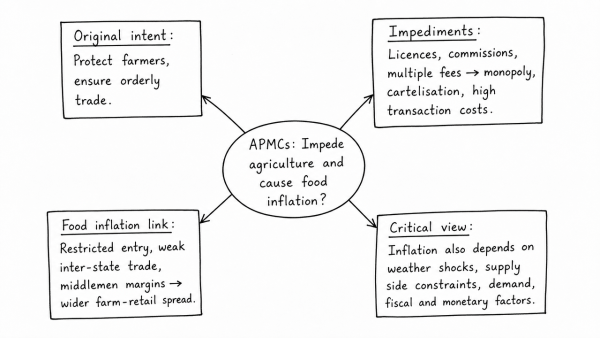
- Impediments to agriculture: Licences, commissions and multiple fees encourage monopoly, cartelisation and high transaction costs. Small farmers face distant mandis, poor grading, storage and cold chains, causing losses and discouraging diversification.
- Food inflation link: Restricted entry, weak inter-state trade and middlemen margins can widen the farm-retail spread, especially in perishables like onions, tomatoes and potatoes, transmitting local shortages into inflation.
- Critical view: Yet food inflation also depends on weather shocks, fuel and input costs, transport bottlenecks and demand growth. APMCs also support MSP procurement and price assurance for smallholders.
Thus, APMCs have often slowed agricultural efficiency and aggravated price volatility, but they are only one among several causes of food inflation; reform, not abrupt abolition, is needed.
Originally written on
August 29, 2026
and last modified on
August 29, 2026.