The world is facing an acute shortage of clean and safe freshwater. What are the alternative technologies which can solve this crisis? Briefly discuss any three such technologies citing their key merits and demerits. (UPSC 2024)
The clean water crisis is no longer only about scarcity; it is also about reliability, quality and climate resilience. Along with conservation, some alternative technologies can expand supply from seawater, wastewater and even air, especially for cities, islands and drought-prone areas.
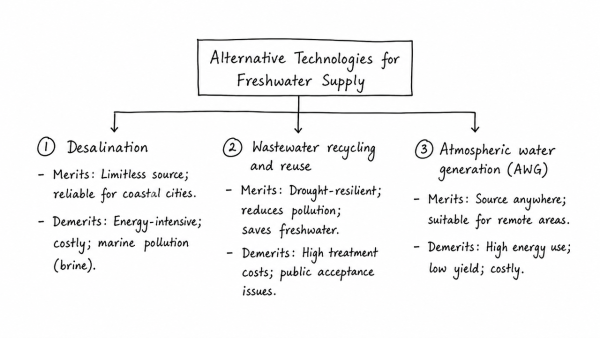
- 1. Desalination
Converts seawater or brackish water into drinkable water, mainly through reverse osmosis or thermal processes.
Merits Uses an almost limitless source; highly reliable for coastal regions; suited to large urban demand. Demerits Very energy-intensive; costly; produces concentrated brine that can damage marine ecosystems. - 2. Wastewater recycling and reuse
Treats sewage and industrial effluents through membranes, filtration and oxidation so that water can be reused for industry, landscaping and even drinking after advanced treatment.
Merits Creates a circular water economy; reduces pollution; needs less energy than desalination; dependable in water-stressed cities. Demerits High initial investment; needs strict monitoring; public hesitation about drinking recycled water remains a barrier. - 3. Atmospheric water generation
Extracts moisture from air by cooling it below dew point or using desiccants, then filters and mineralises the water.
Merits Decentralised and useful in remote areas, disaster zones and places without pipelines; independent of rivers and groundwater. Demerits Output depends on humidity and temperature; low efficiency in dry or cold climates; electricity cost per litre is often high.
Other promising options include fog harvesting, managed aquifer recharge and nanotechnology-based filtration. A mix of such technologies, matched to local conditions and powered increasingly by renewables, can reduce pressure on freshwater sources and improve water security.
Originally written on
September 5, 2026
and last modified on
September 5, 2026.