The women’s questions arose in modern India as a part of the 19th century social reform movement. What were the major issues and debates concerning women in that period? (UPSC 2017)
The “women’s question” in 19th century India was closely tied to social reform, colonial critique and the effort to redefine the family. Reformers, especially among the educated middle classes, debated how far tradition could be retained while removing practices seen as oppressive to women.
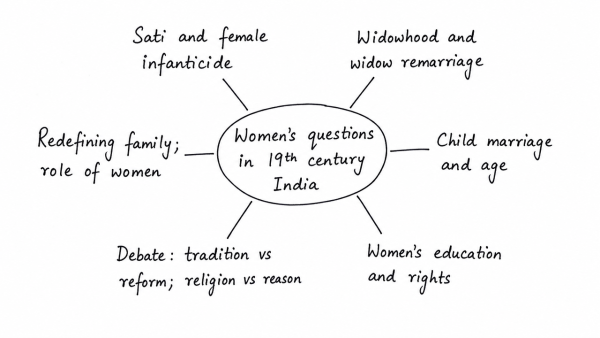
- Sati and female infanticide: Sati was attacked as cruel and un-Hindu by reformers like Raja Rammohan Roy, while orthodox groups defended it as custom and religious duty. Female infanticide, linked to dowry and son preference, also drew reformist concern.
- Widowhood and widow remarriage: The harsh condition of widows, including enforced austerity, head-shaving and exclusion, became a major issue. Ishwar Chandra Vidyasagar argued for widow remarriage on scriptural grounds, but conservatives feared it would disturb family order and caste purity.
- Child marriage and age of consent: Early marriage led to ill health, early widowhood and high maternal mortality. Debates intensified after cases such as Rukhmabai and Phulmoni Dasi, with reformers demanding legal safeguards and nationalist conservatives resisting state intervention in domestic life.
- Female education: Many orthodox voices opposed girls’ education, claiming it would weaken family values. Reformers saw it as essential for better mothers, wives and citizens, and supported girls’ schools and modern curricula.
- Women’s autonomy and purdah: Questions of mobility, seclusion and consent began to surface, especially among elite Muslim and Hindu households.
- Limits of reform: Much early reform focused on upper-caste women and often ignored wider caste and class oppression.
Thus, the women’s question was not only about isolated practices, but about the wider struggle between reform and orthodoxy, gender justice and social control, and indigenous reform and colonial intervention.
Originally written on
August 31, 2026
and last modified on
August 31, 2026.