The terms ‘Hot Pursuit’ and ‘Surgical Strikes’ are often used in connection with armed action against terrorist attacks. Discuss the strategic impact of such actions. (UPSC 2016)
The terms hot pursuit and surgical strikes refer to limited, rapid armed action against terrorist targets, often across borders. Their strategic value lies not just in destroying a target, but in changing the cost calculus of states that shelter non-state actors.
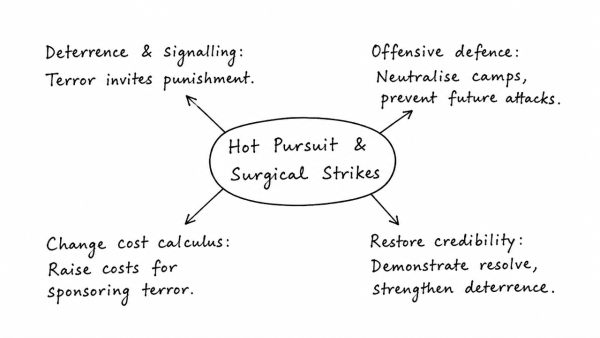
- Deterrence and signalling: Such actions show that terrorism will invite punishment, not only protest. They project resolve and restore some credibility to the threat of retaliation.
- Offensive defence: They shift policy from passive restraint to proactive denial, aiming to neutralise launch pads, camps or key operatives before further attacks occur.
- Limited escalation: Precision and quick withdrawal help keep action below the nuclear threshold and reduce the chance of a full-scale war.
- Political and psychological effect: They boost domestic confidence, reassure the public, and may weaken terrorist morale and recruitment.
- Risks and constraints: Unilateral action can raise sovereignty concerns, invite retaliation, and create escalation spirals. Its success depends on accurate intelligence, good planning and credible air defence.
Overall, these actions can be strategically useful when terror threats are persistent and the sponsoring state is unwilling or unable to act. But they are best seen as a calibrated tool, not a substitute for diplomacy, intelligence cooperation and long-term counter-terror policy.
Originally written on
August 31, 2026
and last modified on
August 31, 2026.