“The reform process in the United Nations remains unresolved, because of the delicate imbalance of East and West and entanglement of the USA vs. Russo-Chinese alliance.” Examine and critically evaluate the East-West policy confrontations in this regard. (UPSC 2025)
The UN reform process is stalled because the Security Council still reflects the 1945 balance of power, not present realities. East-West rivalry, especially between the USA and the Russo-Chinese bloc, has turned reform into a contest over influence rather than collective security.
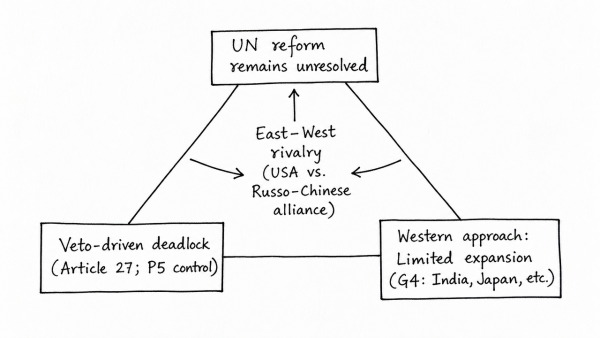
- Veto-driven deadlock: Article 27 makes Charter change dependent on the P5, so those who benefit from the status quo can block reform. Intensified geopolitics have widened mistrust and increased veto use.
- Western approach: The USA, UK and France favour limited expansion, including G4 states such as India, Japan, Germany and Brazil, but resist any new vetoes. This preserves Western influence while appearing supportive of wider representation.
- Russo-Chinese approach: Russia and China invoke greater voice for the developing world, yet resist changes that may empower Western-aligned states. They stress sovereignty and non-interference, and oppose liberal interventionism, including R2P.
Competing models—the G4’s permanent seats, the African Union’s demand for African permanent representation with veto rights, and the UfC’s opposition to new permanent members—have prevented convergence, while recent initiatives such as the Pact for the Future and the veto initiative have not altered the basic power equation.
Thus, East-West confrontation is central but not exclusive, as the growing demand of the Global South for fairer representation shows that UN reform will remain unresolved unless major powers accept broader, more equitable power sharing and veto restraint.