The penetration of Self Help Groups (SHGs) in rural areas in promoting participation in development programmes is facing socio-cultural hurdles. Examine. (UPSC 2014)
SHGs have become an important tool for rural women’s empowerment and participation in development programmes, but their reach is limited by socio-cultural barriers.
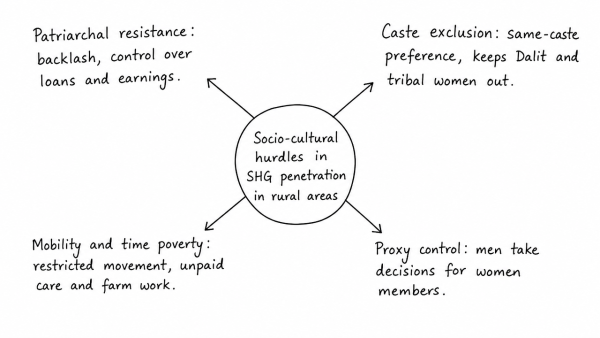
- Patriarchal resistance: Women’s income and public role may invite male backlash, domestic tension and control over loans and earnings.
- Caste exclusion: Same-caste preference, segregated hamlets and elite capture often keep Dalit and tribal women out.
- Mobility and time poverty: Social norms restrict movement, while unpaid care and farm work reduce attendance in meetings, training and bank transactions.
- Proxy control: Men often take decisions for women members, making them nominal participants.
- Low literacy: Weak literacy and digital skills reduce confidence and increase dependence.
Therefore, SHGs can promote genuine participation only when financial inclusion is matched by awareness, literacy, community support and women-led institution building.
Originally written on
August 29, 2026
and last modified on
August 29, 2026.