The life cycle of a joint family depends on economic factors rather than social values. Discuss. (UPSC 2014)
The joint family in India is no longer a fixed residential unit; its size, duration and split points are increasingly shaped by earnings, migration and property, though social values still affect its functioning.
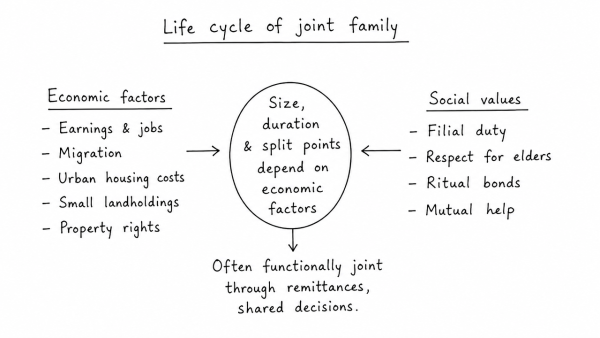
- Economic drivers: Wage employment, urban housing costs, mobility for jobs and education, and small landholdings make co-residence difficult. Rising individual incomes and legal changes in property rights also encourage partition.
- Social values: Filial duty, respect for elders and ritual bonds sustain mutual help even when members live apart. Many families remain functionally joint through remittances, shared decisions and care for children and the aged.
Thus, economic factors mainly determine the life cycle of the joint family, while social values preserve its emotional and moral core.
Originally written on
August 29, 2026
and last modified on
September 7, 2026.