The judicial systems in India and UK seem to be converging as well as diverging in recent times. Highlight the key points of convergence and divergence between the two nations in terms of their judicial practices. (UPSC 2020)
India and the UK share a common-law heritage, but recent judicial practice shows both convergence and divergence.
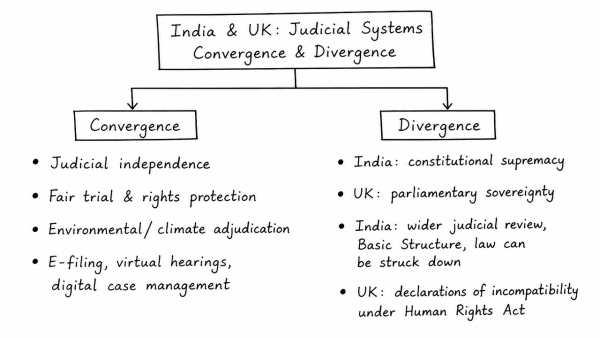
- Convergence: Both stress judicial independence, fair trial norms and stronger rights protection. Their courts are increasingly active in environmental and climate-related adjudication, and both are adopting e-filing, virtual hearings and digital case management.
- Divergence: India follows constitutional supremacy, while the UK rests on parliamentary sovereignty. Indian courts exercise wider judicial review and can strike down laws under the Basic Structure doctrine; UK courts generally issue declarations of incompatibility under the Human Rights Act. India permits liberal PIL and relaxed standing, unlike the UK. Judicial appointments also differ: India uses the collegium system, while the UK has an independent appointments commission.
Thus, the two systems are converging in rights-based, technology-driven justice, but diverging in constitutional authority, review power and institutional design.
Originally written on
September 2, 2026
and last modified on
September 2, 2026.