“The ideal solution of depleting ground water resources in India is water harvesting system.” How can it be made effective in urban areas? (UPSC 2018)
Water harvesting is the most practical way to arrest urban groundwater decline because cities have lost their natural recharge areas. In India, rapid concretisation, rising population and heavy extraction have made aquifers vulnerable, while the same cities also face flooding due to storm water runoff.
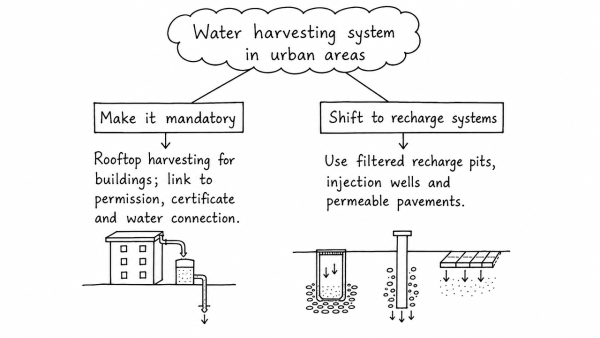
- Make it mandatory in building rules: Enforce rooftop rainwater harvesting for new and existing buildings above a fixed plot size, and link it to building permission, occupancy certificate and water connection.
- Shift from token systems to recharge systems: Use filtered recharge pits, injection wells and shallow aquifer management so rainwater actually reaches usable aquifers rather than only being stored on site.
- Use blue-green infrastructure: Replace some concrete surfaces with permeable pavements, bioswales, recharge trenches, urban ponds and wetlands to slow runoff and improve infiltration.
- Map local geology: Use GIS, satellite data and aquifer mapping to identify safe recharge zones and avoid contamination or structural damage.
- Upgrade drains and storm water lines: Channel clean runoff into recharge structures instead of mixing it with sewage, especially in dense settlements.
- Ensure maintenance and incentives: Municipal bodies should inspect systems regularly, impose penalties on defaulters, and give rebates or property tax concessions to compliant users.
- Promote community participation: Resident welfare associations, markets, schools and slum communities should be involved in planning, upkeep and awareness.
For urban areas, water harvesting will be effective only when it is treated as part of city planning, not as a separate activity. A mix of regulation, technology, ecological design and civic participation can turn rainfall into a reliable source of groundwater recharge.
Originally written on
August 31, 2026
and last modified on
August 31, 2026.