The frequency of earthquakes appears to have increased in the Indian subcontinent. However, India’s preparedness for mitigating their impact has significant gaps. Discuss various aspects. (UPSC 2015)
India’s earthquake risk is rising not because quakes are new, but because exposure and vulnerability are high. The Indian plate continues to collide with Eurasia, and nearly 59% of India lies in seismic zones III-V, especially the Himalayas, North-East, Kutch and parts of the Indo-Gangetic plain.
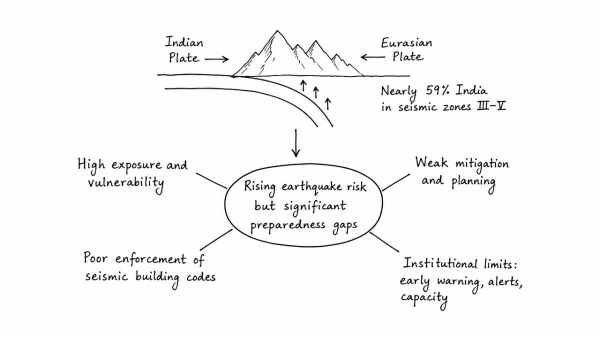
- Preparedness gaps: Many urban buildings in high-risk zones violate seismic codes; rural and semi-urban housing is largely non-engineered.
- Weak mitigation: Retrofitting of hospitals, schools and other lifelines is slow; land-use planning often ignores fault lines and soft soils.
- Institutional limits: Early warning, last-mile alerts, evacuation plans, drills and public awareness remain inadequate; enforcement is weak and corruption in construction worsens losses.
India needs strict code compliance, mandatory retrofitting, safer land-use, real-time alerts and community preparedness to shift from post-disaster response to prevention.
Originally written on
August 30, 2026
and last modified on
August 30, 2026.