“The diverse nature of India as a multi-religious and multi-ethnic society is not immune to the impact of radicalism which is seen in her neighbourhood.” Discuss along with strategies to be adopted to counter this environment. (UPSC 2014)
India’s diversity is a strength, but porous borders, communal fault lines and online propaganda make it vulnerable to radical spillovers from the neighbourhood.
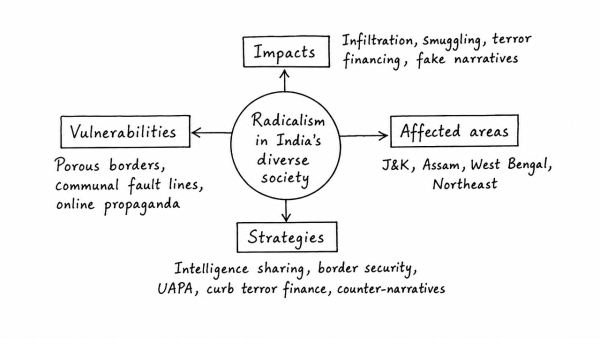
- Impact: Cross-border infiltration, arms and narcotics smuggling, terror financing and fake narratives can inflame religious and ethnic tensions.
- Border states: Jammu and Kashmir, Assam, West Bengal and the Northeast face spillover from unrest in Pakistan, Bangladesh and Myanmar.
- Youth radicalisation: Social media and encrypted platforms aid extremist recruitment and lone-wolf violence.
- Strategies: Strengthen intelligence sharing, border fencing, coastal security and biometric checks; enforce UAPA, curb terror finance and monitor digital platforms.
- Counter-radicalisation: Engage community leaders, schools and prisons for de-radicalisation, civic education and inclusive development.
- Neighbourhood policy: Deepen diplomatic engagement and regional cooperation to address instability at source.
A firm mix of security, social cohesion and constitutional values is needed to deny radicalism space in India.
Originally written on
August 29, 2026
and last modified on
August 29, 2026.