The Citizens’ Charter is an ideal instrument of organizational transparency and accountability, but it has its own limitations. Identify the limitations and suggest measures for greater effectiveness of the Citizens’ Charter. (UPSC 2018)
Citizens’ Charter aims to make public services time-bound, transparent and citizen-friendly, but its impact is uneven.
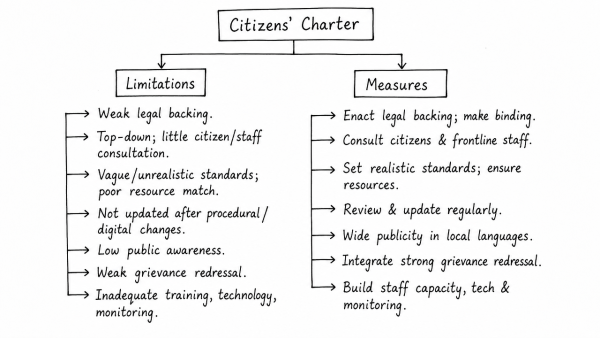
- Limitations: Weak legal backing at the Centre makes many charters non-binding; they are often drafted top-down with little citizen or frontline staff consultation. Standards may be vague, unrealistic, or not matched by manpower, funds and infrastructure. Many charters are not updated after procedural or digital changes. Public awareness is low, especially among rural and marginalised groups. Grievance redressal is often weak or separate from the charter, and staff may lack training, technology and monitoring support.
- Measures: Give stronger statutory support through Right to Service laws, with penalties for delay and compensation. Prepare service-specific charters through consultation, using clear timelines, contact points and appeal channels. Link them to backend reforms, staff training, simplified procedures and digital delivery. Integrate with grievance platforms for monitoring, ensure wide publicity in simple language, and review them periodically through citizen feedback and social audit.
Thus, a Citizens’ Charter works best when backed by law, capacity, participation and continuous monitoring, rather than mere display.
Originally written on
September 1, 2026
and last modified on
September 1, 2026.