The Central Government frequently complains on the poor performance of the State Governments in eradicating suffering of the vulnerable sections of the society. Restructuring of Centrally sponsored schemes across the sectors for ameliorating the cause of vulnerable sections of population aims at providing flexibility to the States in better implementation. Critically evaluate. (UPSC 2013)
The Centre’s concern is valid where State capacity, delay and weak monitoring leave vulnerable groups without timely benefits. Yet blanket criticism ignores that many Centrally Sponsored Schemes are tightly designed by the Union, leaving States with limited room to adapt them to local needs.
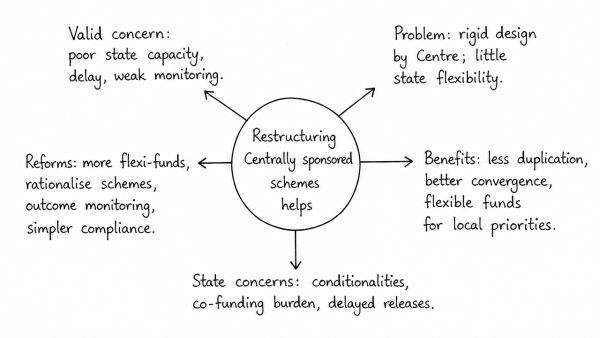
- Why restructuring helps: It can reduce duplication, improve convergence and give States flexible use of funds for local priorities.
- Useful reforms: More untied or flexi-funds, rationalised schemes, outcome-based monitoring, and simpler compliance can improve delivery.
- State concerns: Excessive conditionality, co-funding burdens and delayed releases weaken State autonomy and hurt poorer States most.
Balance: Welfare goals need both Central standards and State flexibility.
Therefore, restructuring CSS is desirable, but not as a device to transfer blame. It should build State capacity, respect fiscal federalism and focus on measurable outcomes for the poor, Scheduled Castes, tribals, women and other vulnerable sections.
Originally written on
August 28, 2026
and last modified on
September 7, 2026.