“The broader aims and objectives of WTO are to manage and promote international trade in the era of globalization. But the Doha round of negotiations seem doomed due to differences between the developed and the developing countries.” Discuss in the Indian perspective. (UPSC 2015)
The WTO remains vital for a rules-based trade order, but the Doha Development Agenda has stalled because of unequal priorities. In India’s view, the deadlock reflects a basic North-South divide: developed states seek wider market opening, while developing countries seek policy space, food security and fairer treatment.
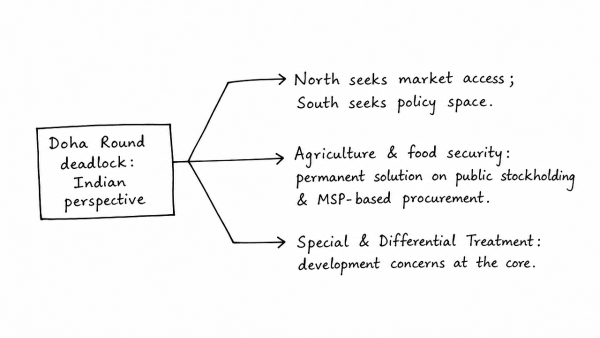
- Agriculture and food security: India wants a permanent solution on public stockholding and MSP-based procurement. The present subsidy rules, based on outdated prices, penalise poor farmers and threaten food security.
- Special and Differential Treatment: India argues that development concerns were central to Doha, yet rich countries resist meaningful concessions on subsidies, tariffs and technology.
- Digital trade and fisheries: India opposes one-size-fits-all rules on e-commerce and fisheries that may hurt MSMEs, small fishers and domestic regulation.
- Multilateral process: India supports consensus-based negotiations and opposes plurilateral shortcuts that weaken the WTO.
Thus, Doha is not irrelevant for India; it shows why WTO reform must balance free trade with equity, food security and development.
Originally written on
August 30, 2026
and last modified on
August 30, 2026.