The Bhakti movement received a remarkable re-orientation with the advent of Sri Chaitanya Mahaprabhu. Discuss. (UPSC 2018)
Sri Chaitanya Mahaprabhu gave the Bhakti movement a new emotional, social and philosophical direction in eastern India. He made devotion to Krishna not merely a religious practice, but a path of intense love, humility and universal access.
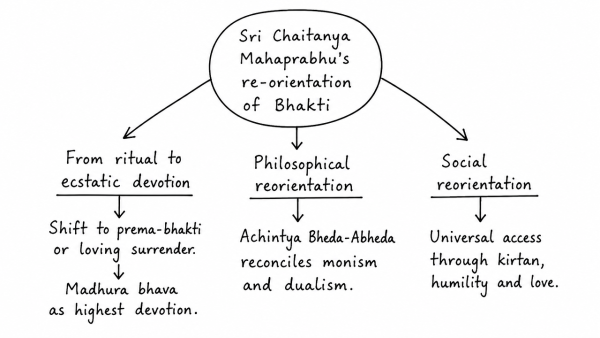
- From ritual to ecstatic devotion: He shifted Bhakti from formal worship and intellectual debate to prema-bhakti or loving surrender. Madhura bhava, inspired by Radha-Krishna love, became the highest form of devotion.
- Philosophical reorientation: His doctrine of Achintya Bheda-Abheda reconciled monism and dualism. It held that the soul is both one with, and different from, Krishna, giving Bhakti a subtle theological base.
- Mass participation: Through sankirtana, collective chanting and dancing moved worship out of elite spaces into streets and public gatherings. The Hare Krishna mantra became open to all.
- Social inclusiveness: He rejected caste barriers in spiritual life. His association with Haridas Thakur showed that devotion, not birth, was the mark of holiness.
- Cultural impact: His movement encouraged Bengali vernacular literature, kirtan traditions and devotional art. His disciples, especially the Six Gosvamis, systematised his teachings.
- Pilgrimage revival: He helped restore the sacred geography of Vrindavan, strengthening Vaishnava identity and devotional networks.
Thus, Sri Chaitanya did not merely continue the Bhakti tradition; he transformed it into a more emotional, egalitarian and participatory movement. His influence gave Indian devotionalism a lasting cultural depth and a wider social reach.
Originally written on
August 31, 2026
and last modified on
August 31, 2026.