The basis of providing urban amenities in rural areas (PURA) is rooted in establishing connectivity. Comment. (UPSC 2013)
PURA, conceived by Dr A.P.J. Abdul Kalam, is based on the idea that rural deprivation is largely a deficit of connectivity, not only of income. Urban amenities can reach villages only when physical, digital and knowledge links reduce isolation and open access to services and markets.
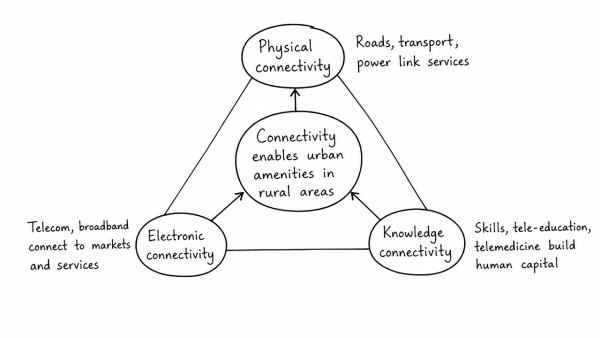
- Physical connectivity: Roads, transport and power link habitations to schools, hospitals and growth centres.
- Electronic connectivity: Telecom and broadband narrow the information gap and connect farmers, students and SHGs to markets and services.
- Knowledge connectivity: Skills, tele-education and telemedicine build local human capital and reduce migration.
- Economic connectivity: Once the above are in place, livelihoods, value addition and enterprise become viable.
The model is best seen in cluster-based development, where groups of villages gain scale and shared facilities. Current rural missions such as road, digital and health programmes reflect this logic. Thus, connectivity is the foundation of PURA, because it converts scattered settlements into integrated rural economies.
Originally written on
August 28, 2026
and last modified on
September 7, 2026.