The anti-colonial struggles in West Africa were led by the new elite of Western-educated Africans. Examine. (UPSC 2016)
Anti-colonial struggles in West Africa were indeed led largely by a new elite of Western-educated Africans. They converted colonial education into a tool of resistance, organised modern parties, and articulated demands for self-government in constitutional language.
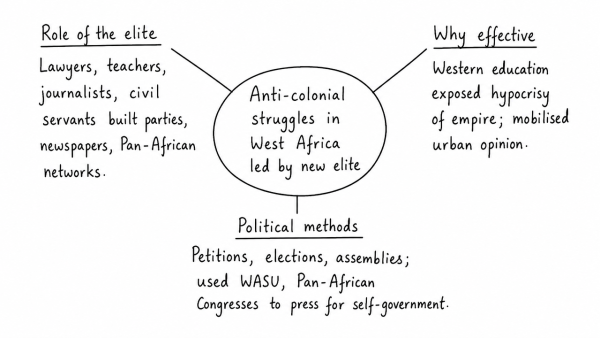
- Role of the elite: Lawyers, teachers, journalists and civil servants such as Nkrumah, Azikiwe, Senghor and Houphouët-Boigny built parties, newspapers and Pan-African networks. Their education helped them expose the hypocrisy of empire and mobilise urban opinion.
- Political methods: They used petitions, elections, assemblies and international platforms like WASU and Pan-African Congresses to press for reform and later independence.
- Limits: They were not the sole leaders. Trade unions, ex-servicemen, peasants and market women gave mass force to nationalism through strikes, riots and boycotts, as seen in the 1948 Accra unrest and the railway strikes in French West Africa.
Thus, Western-educated elites provided leadership and ideology, but anti-colonial victory came from their alliance with broader popular forces.
Originally written on
August 30, 2026
and last modified on
August 30, 2026.