The American Revolution was an economic revolt against mercantilism. Substantiate. (UPSC 2013)
The American Revolution was not merely a political struggle over representation; it was also a revolt against the British mercantilist economic order. Britain treated the colonies as suppliers of raw materials and captive markets, while limiting their trade, money supply and industry.
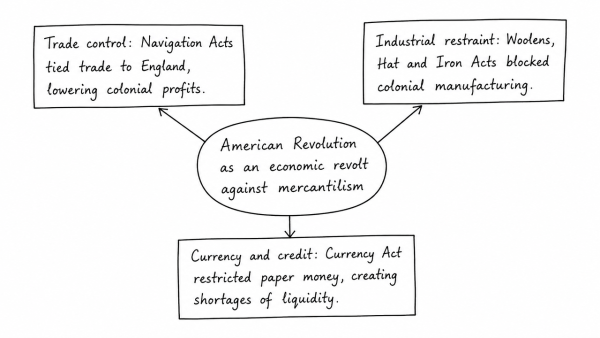
- Trade control: Navigation Acts tied colonial commerce to English shipping and restricted direct trade, lowering colonial profits.
- Industrial restraint: Laws such as the Woolens, Hat and Iron Acts blocked colonial manufacturing to protect British industry.
- Currency and credit: The Currency Act restricted paper money, creating shortages of liquidity and hurting debtors and traders.
- New taxes and enforcement: After 1763, the Sugar, Stamp and Townshend Acts tightened extraction. The Tea Act undercut colonial merchants, while the Boston Port Act punished a key trading centre.
Though the overall economic burden was uneven, it fell sharply on merchants, planters and artisans who led resistance. Thus, the Revolution expressed colonial opposition to mercantilist dependence and the demand for freer trade and economic self-rule.
Originally written on
August 28, 2026
and last modified on
September 6, 2026.