The 1857 Uprising was the culmination of the recurrent big and small local rebellions that had occurred in the preceding hundred years of British rule. Elucidate. (UPSC 2019)
The 1857 Uprising was not a sudden explosion. It was the final and widest expression of a long chain of resistance to British expansion, revenue demands, cultural intrusion and political annexation.
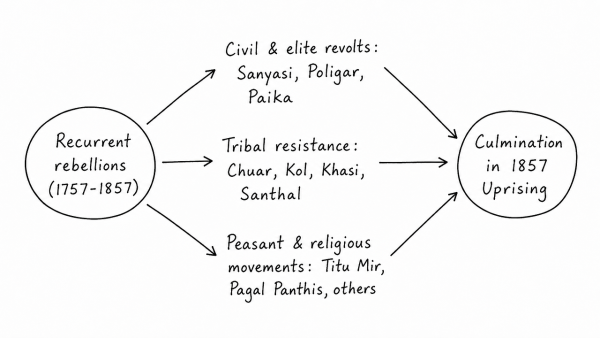
- Civil and elite revolts: Sanyasi-Fakir, Poligar and Paika uprisings reflected the anger of dispossessed rulers, landlords and armed retainers against new taxes, loss of land and erosion of local power.
- Tribal resistance: Chuar, Kol, Khasi and Santhal rebellions defended forest rights, ancestral land and customary autonomy against zamindars, moneylenders and colonial officials.
- Peasant and religious movements: Titu Mir, Pagal Panthis and Faraizi mobilisation showed peasant protest against illegal cesses, indigo oppression and agrarian hardship.
- Sepoy grievances: Vellore and Barrackpore mutinies revealed deep resentment over dress codes, caste fears, batta and overseas service.
These revolts remained local and isolated, but they created a tradition of armed challenge. In 1857, similar grievances converged across regions, and sepoys, peasants and displaced elites united against colonial rule on an unprecedented scale.
Originally written on
September 1, 2026
and last modified on
September 1, 2026.