Taking the example of zoonotic spillover risks, analyze how the “One Health” approach can strengthen India’s public health surveillance systems.
India faces rising zoonotic spillover risks from deforestation, intensive farming, wildlife trade and climate stress. Since a notable share of outbreaks reported under IDSP are zoonotic, surveillance must move beyond a human-only model.
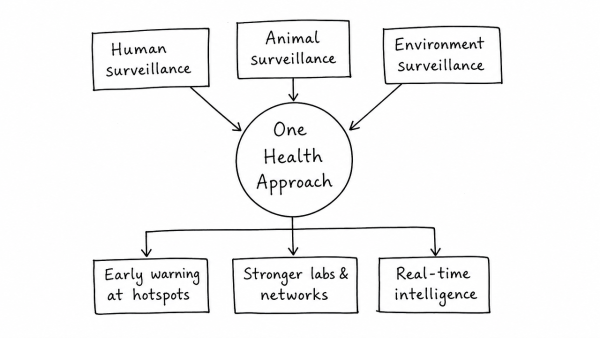
- Early warning: One Health links human, animal and environmental data, helping detect spillover at high-risk sites like slaughterhouses, wetlands, zoos and bird sanctuaries.
- Stronger networks: Zoonotic sentinel sites in medical and veterinary colleges, backed by BSL-3/4 labs and genomic sequencing, can identify novel pathogens faster.
- Real-time intelligence: Integration of IDSP, livestock and environment platforms can improve hotspot mapping, seasonal forecasting and response.
- Better governance: National, state and district One Health committees improve coordination, while community surveillance and notifiable disease reporting widen coverage.
Thus, One Health turns fragmented surveillance into a shared, preventive system. For India, it is essential for timely detection, lower outbreak costs and stronger pandemic preparedness.
Originally written on
September 14, 2026
and last modified on
September 14, 2026.