Taking example of Infrastructure Investment Trusts (InvITs), analyse how innovative asset-monetization instruments can resolve long-term funding bottlenecks in India’s highway sector.
India’s highway sector needs large, steady funds for expansion, operation and maintenance. Traditional budget support and bank loans are often inadequate for such long-gestation assets. Innovative asset-monetisation tools, especially InvITs, can bridge this gap by converting operational highways into investible financial assets.
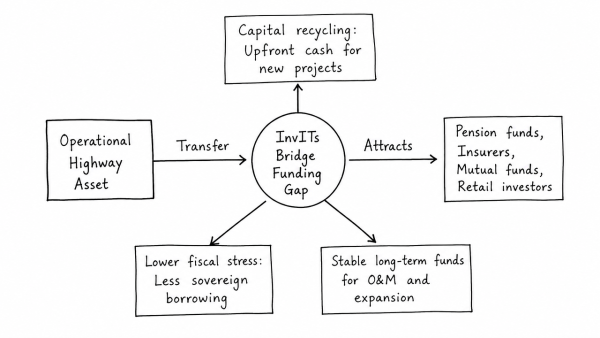
- Capital recycling: Completed highway assets are transferred to a trust, unlocking upfront cash for new projects.
- Wider investor base: InvITs attract pension funds, insurers, mutual funds and retail investors seeking stable returns.
- Lower fiscal stress: They reduce dependence on sovereign borrowing and help NHAI repay debt and finance fresh construction.
- Better governance: SEBI regulation, professional management and mandatory cash distribution improve transparency and investor confidence.
- Sector impact: Under the asset recycling model, monetised highway stretches can support the next pipeline of roads, easing the funding bottleneck.
Thus, asset-monetisation instruments create a “build, monetise, rebuild” cycle. With sound regulation, predictable toll revenues and a steady asset pipeline, they can make highway funding more sustainable and private capital more central to infrastructure growth.
Originally written on
September 13, 2026
and last modified on
September 13, 2026.