“Success of ‘Make in India’ programme depends on the success of ‘Skill India’ programme and radical labour reforms.” Discuss with logical arguments. (UPSC 2015)
Make in India aims to boost manufacturing, jobs and exports, but incentives alone cannot create a competitive industrial base.
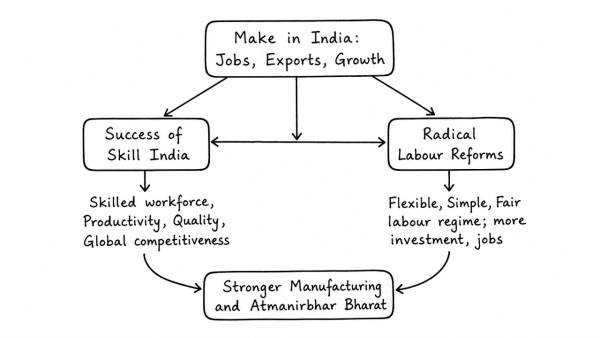
- Skill India is essential: Modern factories use automation, CNC machines and digital systems; without trained workers, firms face skill shortages, low productivity and poor quality. Better skills help India move up global value chains in electronics, semiconductors, biopharma and green manufacturing, while widening employment for youth and women.
- Labour reforms are equally vital: A complex, rigid labour regime raises compliance costs and discourages investment. The labour codes, fixed-term employment and clearer dispute rules can improve flexibility, ease scaling up and reduce informality, while social security can protect workers.
Therefore, Make in India succeeds only when skilled manpower and radical, balanced labour reforms jointly enable investment, productivity and inclusive industrial growth.
Originally written on
August 30, 2026
and last modified on
August 30, 2026.