Stem cell therapy is gaining popularity in India to treat a wide variety of medical conditions including Leukaemia, Thalassemia, damaged cornea and severe burns. Describe briefly what stem cell therapy is and what advantages it has over other treatments. (UPSC 2017)
Stem cell therapy is a form of regenerative medicine in which unspecialised cells are used to repair, replace or regenerate damaged tissues. These cells can self-renew and develop into specific cells such as blood, skin, bone or nerve cells.
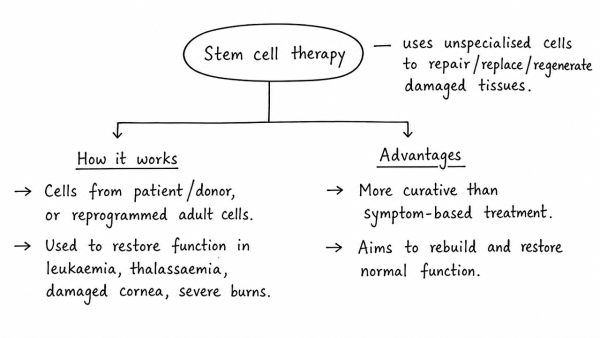
- How it works: Stem cells may be taken from the patient, a donor, or produced by reprogramming adult cells. They are then used to restore function in diseases like leukaemia, thalassaemia, damaged cornea and severe burns.
- Key advantages: It is more curative than symptom-based treatment, as it aims to rebuild the affected tissue.
- Lower rejection risk: Patient’s own cells reduce immune rejection and the need for long-term immunosuppressive drugs.
- Better tissue repair: It can restore lost function where drugs or surgery only manage the condition.
- Less donor dependence: It reduces shortage of suitable organs or tissues for transplantation.
Thus, stem cell therapy offers hope of true healing in conditions where conventional treatment is limited, though its use should remain evidence-based and properly regulated.
Originally written on
August 31, 2026
and last modified on
August 31, 2026.