Smart cities in India cannot sustain without smart villages. Discuss this statement in the backdrop of rural urban integration. (UPSC 2015)
Smart cities in India cannot be sustained in isolation, as cities and villages now function as one rural-urban continuum. Urban growth depends on nearby rural areas for labour, food, water, and ecological support, while villages depend on cities for markets, services, and technology.
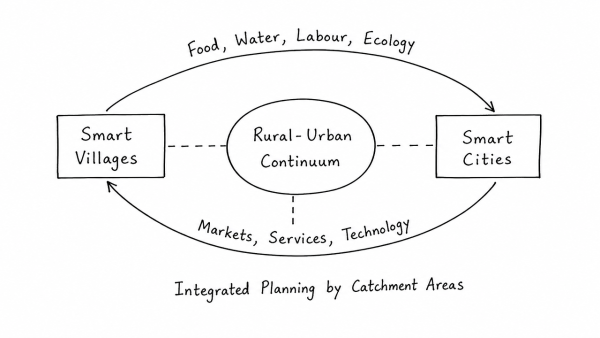
- Why smart villages matter: They reduce distress migration, improve rural jobs, education, health care and digital access, and ease pressure on urban housing, slums and transport.
- Functional linkages: Peri-urban areas, census towns and rurban clusters show mixed land use and economic flows. Planning by catchment areas is more useful than rigid rural-urban separation.
- Governance needs: DPCs and MPCs, backed by the 73rd and 74th Amendments, should coordinate spatial planning, water, waste, roads and livelihoods.
Smart villages also protect watersheds, farmlands and green buffers that cities need for food security, climate resilience and lower pollution. Thus, balanced regional development, not city-centric planning, is the real basis of smart urbanisation.
Originally written on
August 30, 2026
and last modified on
August 30, 2026.