“Simultaneous election to the Lok Sabha and the State Assemblies will limit the amount of time and money spent in electioneering but it will reduce the government’s accountability to the people.” Discuss. (UPSC 2017)
Simultaneous elections can cut the huge cost of repeated campaigning and spare the administration from near-constant election duty. Yet the claim that they weaken accountability is also serious, because frequent elections keep governments under pressure from voters and local issues.
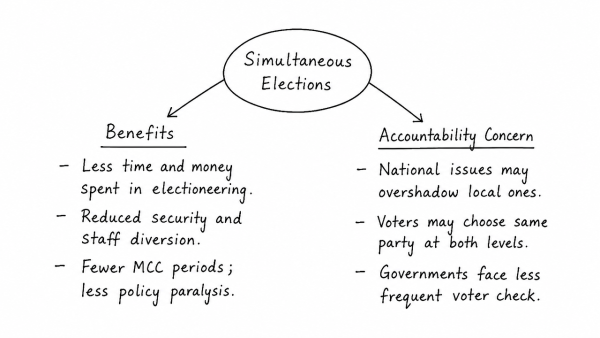
- Benefits: One election cycle can reduce campaign spending, security deployment and staff diversion. It can also limit repeated Model Code of Conduct periods, which often delay policy action.
- Accountability concern: When Lok Sabha and Assembly polls are held together, national issues may dominate, and voters may choose the same party for both levels. This can blur state-specific performance review.
- Federal concern: State governments may lose some electoral space to raise regional concerns, especially if the national wave influences all outcomes.
However, accountability need not fall if legislatures use stronger committees, questions, media scrutiny and local polls at regular intervals. Simultaneous elections are thus efficient, but they must be designed carefully so that convenience does not override democratic responsiveness.
Originally written on
August 31, 2026
and last modified on
August 31, 2026.