Sikkim is the first ‘Organic State’ in India. What are the ecological and economical benefits of Organic State? (UPSC 2018)
Sikkim’s shift to fully organic farming has made agriculture cleaner, safer and more resilient. It shows how ecological protection and rural income can go together in a fragile Himalayan region.
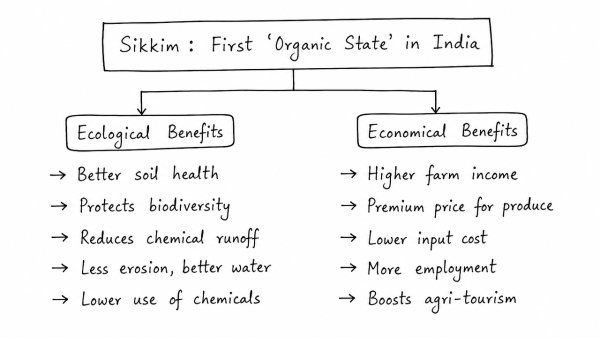
- Ecological benefits: No synthetic fertilisers or pesticides means better soil health, higher soil organic carbon, and richer microbial life.
- It protects biodiversity, native seeds and pollinators, while reducing chemical runoff into rivers and groundwater.
- Organic methods such as mulching and agroforestry reduce erosion on steep slopes and improve water retention, helping crops withstand climate stress.
- Lower use of chemical inputs also cuts greenhouse gas emissions and food-chain toxicity.
- Economic benefits: Farmers save on costly inputs and are less dependent on external markets for fertilisers and pesticides.
- Organic certification and branding help fetch premium prices for crops like large cardamom, ginger and turmeric.
- It also supports value addition, processing, agri-tourism and exports, creating rural jobs and stronger livelihoods.
Thus, Sikkim’s organic model promotes sustainable farming, environmental security and inclusive economic growth.
Originally written on
September 1, 2026
and last modified on
September 1, 2026.