Scientific research in Indian universities is declining, because a career in science is not as attractive as are business professions, engineering or administration, and the universities are becoming consumer-oriented. Critically comment. (UPSC 2014)
Scientific research in Indian universities is under pressure, but it is not in simple decline. India remains a major producer of papers and is improving in innovation rankings, yet the gap between output and quality, and between knowledge and jobs, is serious.
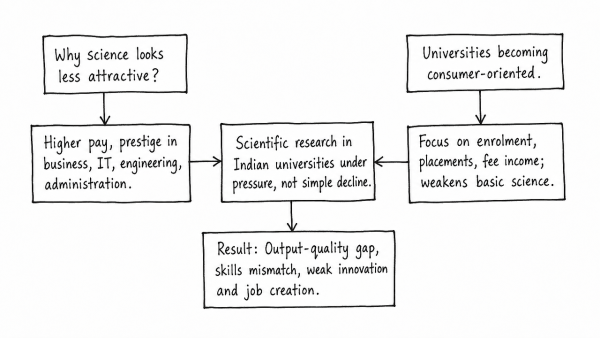
- Why science looks less attractive: Careers in business, IT, engineering and administration offer higher pay, quicker promotion and greater social prestige. By contrast, young researchers face modest stipends, uncertain jobs and slow career growth.
- Consumer-oriented universities: Many institutions chase enrolment, placements and fee income. This weakens basic science, discourages long-term inquiry and reduces time for laboratories, mentoring and field work.
- Structural limits: Vacant faculty posts, heavy teaching loads and weak research funding further depress academic research culture.
However, the picture is mixed. R&D spending has recovered, and new initiatives such as ANRF and mission-mode funding can improve collaboration and support young scientists. The real issue is not only decline, but the need to make science careers rewarding, secure and socially valued.
Originally written on
August 29, 2026
and last modified on
August 29, 2026.