Safeguarding the Indian art heritage is the need of the moment. Discuss. (UPSC 2018)
Safeguarding Indian art heritage is urgent because it is a record of civilisational memory, identity and creativity. It is also a public asset that supports tourism, livelihoods and cultural pride.
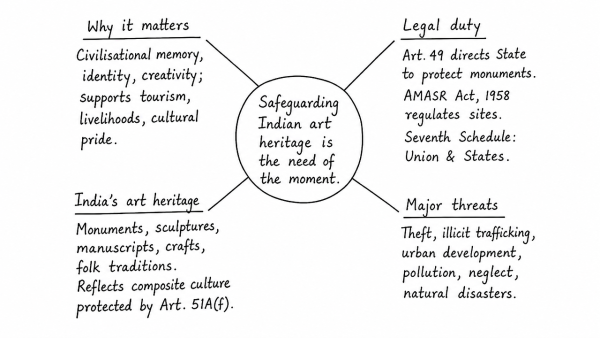
- Why it matters: India’s art heritage includes monuments, sculptures, manuscripts, crafts and folk traditions. It reflects the composite culture protected by Article 51A(f).
- Legal duty: Article 49 directs the State to protect monuments of national importance. The AMASR Act, 1958 regulates protected sites, while the Seventh Schedule divides responsibility between Union and States.
- Major threats: Theft and illicit trafficking, urban encroachment, pollution, climate stress, neglect of museums, and decline of traditional skills.
- Economic value: Heritage tourism creates jobs and supports local economies, but poor upkeep reduces this potential.
- Way forward: Stronger site management, digital cataloguing, community participation, trained conservation staff, stricter action against smuggling, and funding for living crafts are essential.
Thus, heritage protection is not nostalgia but nation-building. Preserving art heritage today will ensure continuity, education and inclusive growth for future generations.
Originally written on
August 31, 2026
and last modified on
August 31, 2026.