Pala period is the most significant phase in the history of Buddhism in India. Enumerate. (UPSC 2020)
The Pala period (8th to 12th century CE) was the last great phase of Buddhism in India. In Bengal and Bihar, it revived state patronage, intellectual life and artistic excellence, making the region a world centre of Buddhist learning.
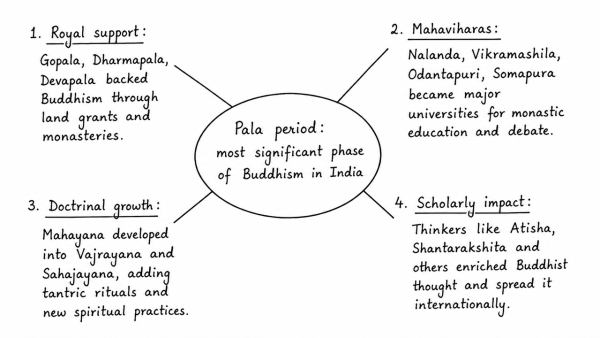
- Royal support: Gopala, Dharmapala and Devapala backed Buddhism through land grants and monasteries, creating stable patronage.
- Mahaviharas: Nalanda, Vikramashila, Odantapuri and Somapura became major universities for monastic education and debate.
- Doctrinal growth: Mahayana developed into Vajrayana and Sahajayana, adding tantric rituals and new spiritual practices.
- Scholarly impact: Thinkers like Atisha, Shantarakshita and Haribhadra shaped Buddhist philosophy and later influenced Tibet.
- Art and literature: The Pala school of art, bronze icons, and Charyapada enriched Buddhist culture and spread its reach.
Thus, the Pala age preserved Buddhism when it was declining elsewhere, while also reshaping its doctrine, institutions, art and international influence.
Originally written on
September 1, 2026
and last modified on
September 1, 2026.