One of the intended objectives of the Union Budget 2017-18 is to ‘transform, energise and clean India’. Analyse the measures proposed in the Budget 2017-18 to achieve the objective. (UPSC 2017)
The Union Budget 2017-18 linked fiscal policy with governance reform, inclusion and transparency to “transform, energise and clean India”.
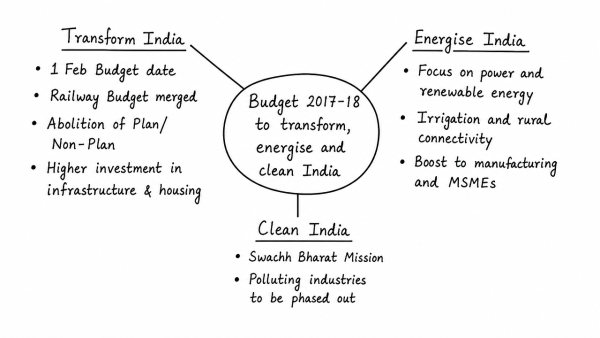
- Transform India: Advancing the Budget date to 1 February and merging the Railway Budget with the General Budget improved coordination and planning. The abolition of the Plan/non-Plan distinction aimed to shift focus from accounting categories to outcomes. Higher allocations for roads, railways, irrigation, rural connectivity and affordable housing were meant to raise productivity and living standards. Institutional simplification, including abolition of FIPB and creation of a National Testing Agency, signalled easier and more efficient administration.
- Energise India: Greater support for rural development, MGNREGS, irrigation and agricultural credit sought to boost farm incomes and reduce distress. Skill and employment initiatives such as SANKALP were intended to improve employability, while infrastructure status for affordable housing aimed to generate jobs and stimulate demand.
- Clean India: Promotion of digital payments through BHIM and Aadhaar Pay, along with measures to curb cash transactions and strengthen banking channels for political donations, aimed to reduce black money, tax evasion and opacity in public life.
Overall, the Budget attempted a reform-driven, pro-poor and transparency-oriented agenda, though its impact depended on effective implementation and cooperative federalism.
Originally written on
August 31, 2026
and last modified on
August 31, 2026.