Not many years ago, river linking was a concept but it is becoming a reality in the country. Discuss the advantages of river linking and its possible impact on the environment. (UPSC 2017)
River linking is moving from a long-held idea to selective implementation in India. It aims to transfer water from surplus basins to deficit areas, especially when rainfall is highly seasonal and uneven.
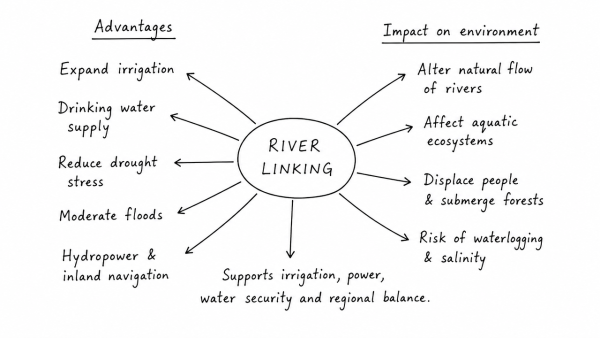
- Advantages:
It can expand irrigation, raise crop yields and support food security. It also helps drinking water supply, reduces drought stress, moderates floods, and may generate hydropower and improve inland navigation. - Development impact:
Projects such as Ken-Betwa can support irrigation, power and water security in water-scarce regions. A connected network may improve regional balance and reduce climate-related vulnerability. - Environmental concerns:
Large dams and canals may submerge forests, fragment habitats and displace people. They can alter environmental flows, reduce sediment downstream, harm deltas and mangroves, and affect fish, dolphins and other aquatic life. - Long-term risks:
In fragile Himalayan areas, there are concerns of landslides, seismic stress, waterlogging, salinity and high evaporation losses.
Thus, river linking offers major socio-economic gains, but it must be planned cautiously with strict environmental appraisal, ecological flows and fair rehabilitation.
Originally written on
August 31, 2026
and last modified on
August 31, 2026.