National Education Policy 2020 is in conformity with Sustainable Development Goal-4 (2030). It intends to restructure and reorient the education system in India. Critically examine the statement. (UPSC 2020)
NEP 2020 broadly aligns with SDG-4, which calls for inclusive, equitable, quality education and lifelong learning by 2030. It seeks to shift India’s system from mere enrolment to learning outcomes, equity, flexibility and skills.
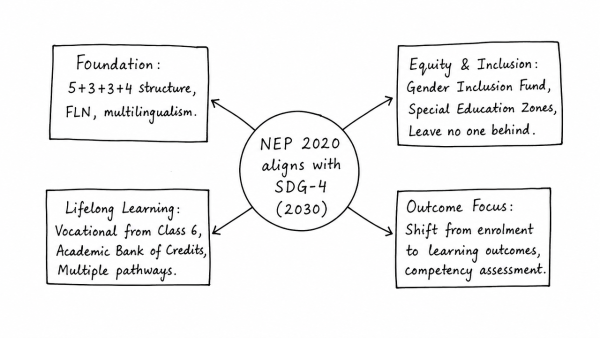
- Alignment with SDG-4: The 5+3+3+4 structure strengthens ECCE and foundational learning; emphasis on FLN, competency-based assessment and multilingualism improves basic learning.
- Equity and inclusion: Gender Inclusion Fund, Special Education Zones and focus on disadvantaged groups reflect the “leave no one behind” principle.
- Lifelong learning and relevance: Vocational exposure from Class 6, Academic Bank of Credits, multiple entry-exit options and multidisciplinary higher education promote employability and lifelong learning.
- System reform: ITEP, National Professional Standards for Teachers, PARAKH and research reforms aim to improve quality, accountability and institutional capacity.
- Critical gaps: Implementation remains uneven; public spending is below the 6% GDP target, affecting infrastructure, teacher vacancies and digital access. Retention and completion remain weak, especially for poor, rural, tribal and first-generation learners. State-level adoption is fragmented, and capacity constraints and inadequate facilities slow progress.
Thus, NEP 2020 is in conformity with SDG-4 in vision and design, but its transformative promise will depend on adequate funding, stronger federal coordination and timely implementation.
Originally written on
September 2, 2026
and last modified on
September 2, 2026.