Mob violence is emerging as a serious law and order problem in India. By giving suitable examples, analyze the causes and consequences of such violence. (UPSC 2017)
Mob violence has shifted from occasional disorder to a serious challenge to constitutional governance. It includes lynching, vigilantism and unlawful crowds acting on rumour, identity or suspicion.
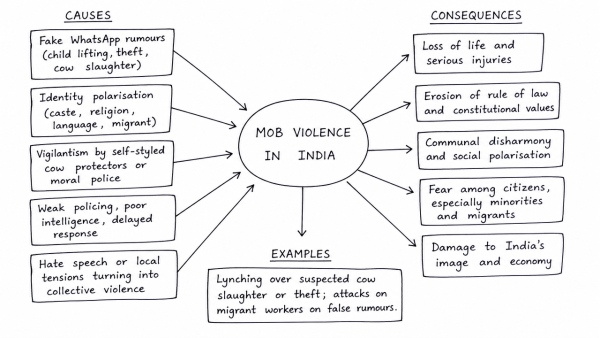
- Causes: Fake WhatsApp rumours over child lifting, theft or cow slaughter; identity polarisation along caste, religion, language or migrant status; vigilantism by self-styled cow protectors or moral police; weak policing, poor intelligence and delayed response; and hate speech or local tensions turning into collective violence.
- Examples: Lynching over suspected cow slaughter or theft in several states; attacks on migrant workers on false rumours of crime or illegal entry; ethnic violence in Manipur, where armed mobs and retaliatory attacks caused deaths and displacement.
- Consequences: Rule of law is weakened when mob justice replaces due process, violating Articles 14 and 21. It deepens fear and social distrust, disrupts labour, trade and transport, and erodes public faith in the state through repeated administrative failure.
The BNS, 2023 and Supreme Court directions on prevention, fast-tracking and accountability are important, but only firm policing, swift punishment and action against hate propaganda can prevent mob violence from becoming normalised.
Originally written on
August 31, 2026
and last modified on
August 31, 2026.