Mesolithic rock cut architecture of India not only reflects the cultural life of the times but also a fine aesthetic sense comparable to modern painting. Critically evaluate this comment. (UPSC 2015)
The phrase “Mesolithic rock cut architecture” is technically inaccurate. The Mesolithic age in India is known for rock shelter paintings and engravings, not true rock-cut architecture, which came much later.
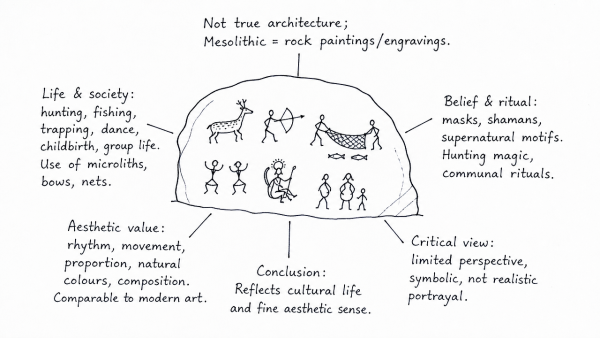
- Life and society: The paintings at Bhimbetka, Lakhudiyar and similar sites show hunting, fishing, trapping, dance, childbirth and group life. They reveal a close link between people, animals and nature, and the use of microliths, bows and nets.
- Belief and ritual: Figures with masks, shamans and supernatural motifs suggest early religious ideas, hunting magic and communal rituals.
- Aesthetic value: The art uses simple lines, movement, balance and natural rock surfaces with great skill. Its stylised forms and vivid action can be compared with modern painting in terms of expression and abstraction.
However, the comparison has limits. Mesolithic art was mainly functional, collective and symbolic, not individual or meant for pure beauty. Thus, it is both a cultural record and a remarkable early artistic achievement.
Originally written on
August 29, 2026
and last modified on
August 29, 2026.