Mention the advantages of the cultivation of pulses because of which the year 2016 was declared as the International Year of Pulses by the United Nations. (UPSC 2017)
Pulses are vital for sustainable agriculture and nutrition. Their cultivation was promoted globally because they improve soils, provide affordable protein and support climate-resilient farming.
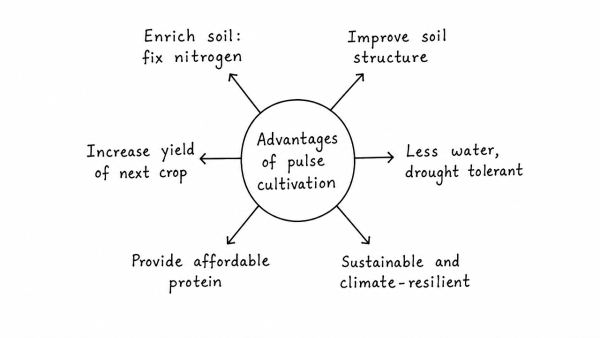
- Soil enrichment: Pulses fix atmospheric nitrogen through Rhizobium bacteria, reducing use of chemical fertilisers and improving soil fertility.
- Better crop productivity: They mobilise phosphorus, improve soil structure and, in rotation, raise the yield of succeeding crops by breaking pest and disease cycles.
- Climate and water benefits: Pulses need less water, tolerate drought and can grow on marginal lands, making them suitable for rainfed areas.
- Nutrition and food security: Rich in protein, fibre, iron, zinc and folate, they are a low-cost source of balanced diet, especially for poor households.
- Economic gain: They diversify farm income and can reduce livestock methane emissions when used as feed or residue.
Thus, pulses contribute to sustainable farming, healthier diets and resilient livelihoods, which justified declaring 2016 as the International Year of Pulses.
Originally written on
August 31, 2026
and last modified on
August 31, 2026.