Mahatma Gandhi and Dr. B.R. Ambedkar, despite having divergent approaches and strategies, had a common goal of amelioration of the downtrodden. Elucidate. (UPSC 2015)
Mahatma Gandhi and Dr. B.R. Ambedkar differed sharply in diagnosis and method, yet both worked for the dignity and uplift of the oppressed. Their common goal was to end untouchability and secure social equality for the downtrodden.
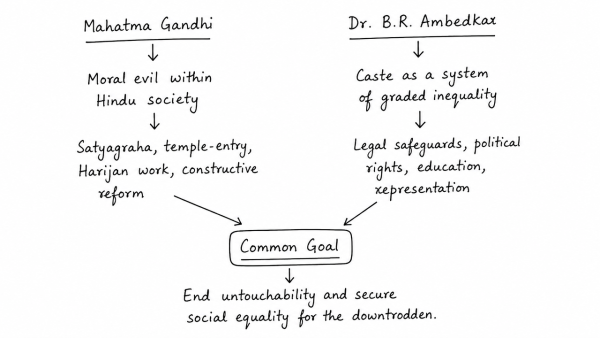
- Shared aim: Both made the condition of the Depressed Classes a national concern and sought their social, educational and political emancipation.
- Gandhi’s approach: He viewed untouchability as a moral evil within Hindu society and used Satyagraha, temple-entry, Harijan work and constructive reform to change hearts and practices.
- Ambedkar’s approach: He saw caste as entrenched structural injustice and demanded rights, representation, education, legal safeguards and the annihilation of caste.
Thus, Gandhi sought reform from within, while Ambedkar pursued transformation through rights and constitutionalism, but both aimed at the liberation and equal citizenship of the downtrodden.
Originally written on
August 29, 2026
and last modified on
August 29, 2026.