Khap Panchayats have been in the news for functioning as extra-constitutional authorities, often delivering pronouncements amounting to human rights violations. Discuss critically the actions taken by the legislative, executive and the judiciary to set the things right in this regard. (UPSC 2015)
Khap Panchayats, as caste-based informal bodies, often issue diktats against marriage choices and personal liberty, undermining constitutional democracy. They offend Article 14, 15 and 21, and operate as parallel courts without legal sanction.
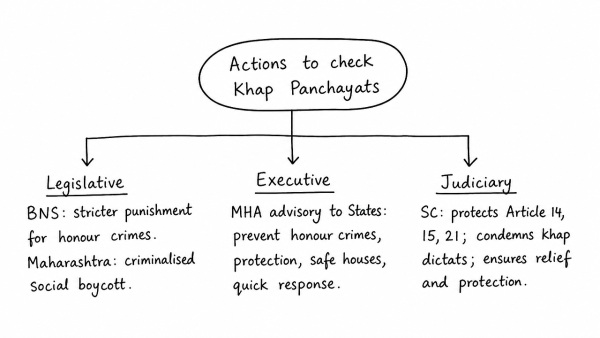
- Legislative action: No single central law bans khaps, but the Bharatiya Nyaya Sanhita now provides stricter punishment for group murder on honour grounds. Maharashtra has also criminalised social boycott by caste panchayats.
- Executive action: The Home Ministry has advised States to prevent honour crimes, identify vulnerable areas, strengthen police protection, safe houses and quick response systems. Yet implementation remains uneven due to local pressure and weak policing.
- Judicial action: The Supreme Court has been the most forceful. In Lata Singh, Arumugam Servai and Shakti Vahini, it condemned khaps, upheld adults’ right to marry, and ordered preventive, remedial and punitive measures, including action against officials who fail to protect couples.
Thus, the response is significant but incomplete. Stronger enforcement, witness protection, awareness and a dedicated national law are still needed to end extra-constitutional justice.
Originally written on
August 30, 2026
and last modified on
August 30, 2026.