It is said that India has substantial reserves of shale oil and gas, which can feed the needs of the country for a quarter century. However, tapping of these resources does not appear to be high on the agenda. Discuss critically the availability and issues involved. (UPSC 2013)
India likely has sizable shale oil and gas in Cambay, Krishna-Godavari, Cauvery, Assam-Arakan and Damodar basins; estimates vary, but resources are potentially large enough to support demand for decades.
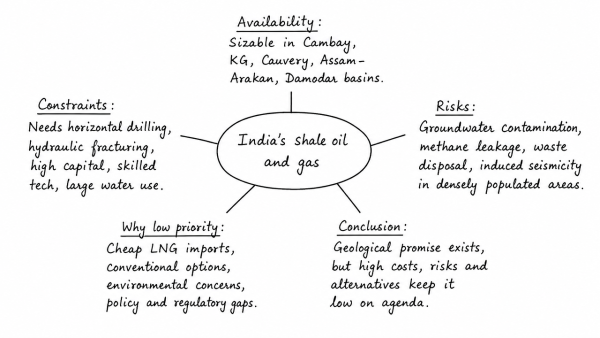
- Availability: Geological promise exists, but recoverability is uncertain and basin-wise data remain limited.
- Constraints: Shale needs horizontal drilling and hydraulic fracturing, high capital, skilled technology, and large water use—areas where India is weak.
- Risks: Groundwater contamination, methane leakage, waste disposal and induced seismicity are major concerns in densely populated regions.
- Why low priority: Cheap LNG imports, conventional hydrocarbon options, and the shift to cleaner energy reduce immediate urgency.
Hence, India should pursue only selective pilot projects with strong regulation, water management and environmental safeguards rather than a rapid nationwide shale push.
Originally written on
August 28, 2026
and last modified on
September 6, 2026.