Individual parliamentarians’ role as national lawmakers is on a decline, which in turn, has adversely impacted the quality of debates and their outcome. Discuss. (UPSC 2019)
Individual parliamentarians are expected to represent constituencies, scrutinise the executive and shape laws through debate, but in practice their role has narrowed, weakening Parliament’s deliberative quality.
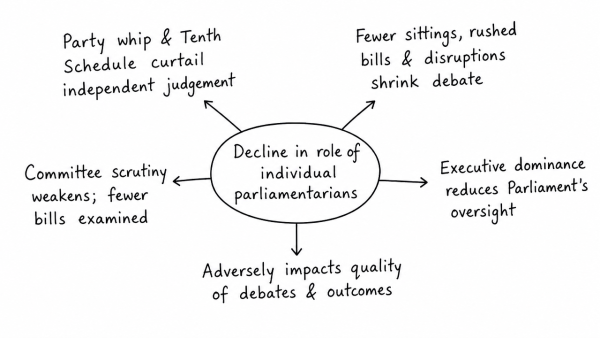
- Party control dominates: The whip and the Tenth Schedule often compel MPs to vote as directed, leaving little space for independent judgement or conscience voting, even on many ordinary Bills.
- Debate opportunities shrink: Fewer sitting days, rushed legislation and frequent disruptions reduce sustained discussion; in the 17th Lok Sabha, average sittings were far below earlier Parliaments.
- Committee scrutiny weakens: A declining share of Bills is referred to Department-related Standing Committees, limiting detailed examination, amendment and cross-party input by MPs.
- Private initiative fades: Private Members’ Bills and resolutions, once a sign of individual initiative, rarely influence lawmaking, and MPs increasingly remain formal participants rather than active legislators.
- Accountability tools are diluted: Curtailment of Question Hour, guillotining of debates and staged walkouts reduce oversight and turn Parliament into a numbers-driven forum.
As a result, debates become shorter, less informed and more polarised, while outcomes often reflect executive preference more than legislative scrutiny, leading to hurried laws, weak drafting and lower public trust; restoring committee referrals, protecting Question Hour, limiting whips to confidence issues and ensuring adequate sittings can revive MPs’ lawmaking role.
Originally written on
September 1, 2026
and last modified on
September 1, 2026.