India’s proximity to two of the world’s biggest illicit opium-growing states has enhanced her internal security concerns. Explain the linkages between drug trafficking and other illicit activities such as gunrunning, money laundering and human trafficking. What counter-measures should be taken to prevent the same? (UPSC 2018)
India’s location between the Golden Crescent and the Golden Triangle makes its borders vulnerable to narcotics inflows. The same routes and networks used for opium and heroin often sustain a wider organised crime economy.
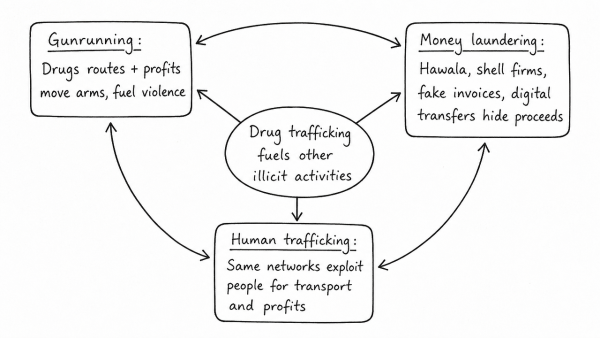
- Gunrunning: Drug smugglers use shared border routes, river gaps, drones and courier chains to move small arms along with narcotics. Drug profits also help insurgent and criminal groups purchase weapons and prolong violence.
- Money laundering: Narcotics proceeds are laundered through hawala, shell firms, fake invoices and digital transfers, concealing illicit wealth and financing corruption, terror and organised crime.
- Human trafficking: Vulnerable migrants, women and children are used as couriers, forced labour or sexual exploitation victims, especially in border and conflict zones.
- Counter-measures: Strengthen border fencing, surveillance, night patrolling and anti-drone systems; ensure intelligence-led coordination among NCB, BSF, police, customs and financial agencies; crack down on hawala, crypto and trade-based laundering; use swift trials, asset seizure and witness protection; expand de-addiction, awareness and livelihood support in vulnerable districts; and deepen regional cooperation for joint action and information sharing.
A combined strategy of hard borders, smart intelligence, financial disruption and social prevention is essential to break the drug-crime nexus and protect internal security.
Originally written on
September 1, 2026
and last modified on
September 1, 2026.