Indian Government has recently strengthened the anti-terrorism laws by amending the Unlawful Activities (Prevention) Act (UAPA), 1967 and the NIA Act. Analyze the changes in the context of prevailing security environment while discussing the scope and reasons for opposing the UAPA by human rights organizations. (UPSC 2019)
India’s anti-terror framework was tightened to address lone-wolf attacks, online radicalisation, terror financing, cyber-terror and the terror-organised crime nexus.
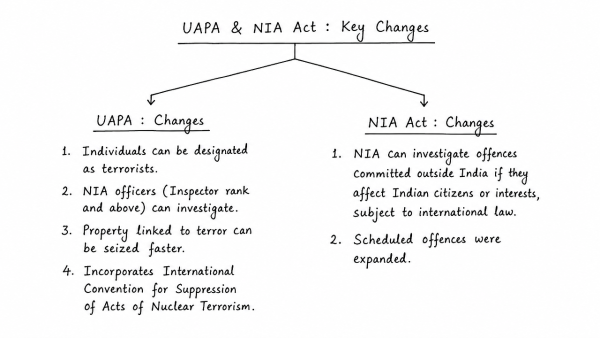
- UAPA changes: Individuals, not just organisations, can be designated as terrorists; NIA officers of Inspector rank and above may investigate; property linked to terror can be seized faster; and the law now incorporates the International Convention for Suppression of Acts of Nuclear Terrorism.
- NIA Act changes: The NIA can investigate certain offences committed outside India if they affect Indian citizens or interests, subject to international law. Scheduled offences were expanded to include human trafficking, counterfeit currency, cyber-terrorism, prohibited arms and explosives-related crimes.
- Security rationale and concerns: These measures help tackle decentralised cells, transnational conspiracies and delays in weak state coordination. Human rights groups oppose UAPA for its stringent bail provisions, long pre-trial detention, designation of persons as terrorists without prior conviction, and vague terms that may be misused against dissenters; they also cite low conviction rates and federalism concerns.
The amendments respond to genuine security threats, but their legitimacy depends on narrow drafting, strict oversight, speedy trials and robust safeguards for civil liberties.
Originally written on
September 1, 2026
and last modified on
September 1, 2026.