In what ways would the ongoing US-Iran Nuclear Pact Controversy affect the national interest of India? How should India respond to this situation? (UPSC 2018)
The US-Iran nuclear pact controversy affects India mainly through energy security, trade routes and regional stability. Even if India’s direct oil imports from Iran are low, any escalation in sanctions or conflict can sharply raise global crude prices and disturb West Asian shipping lanes that are vital for India.
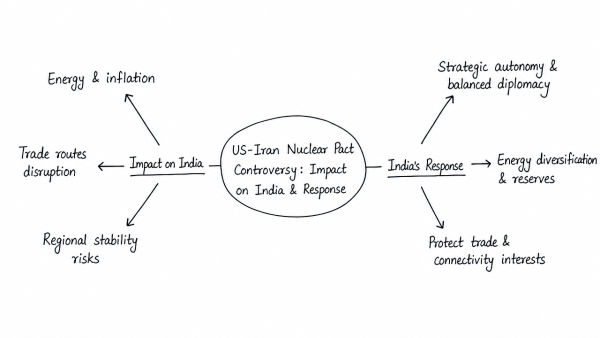
- Energy and inflation: Higher oil prices increase India’s import bill, widen the current account deficit and fuel inflation, hurting growth and the poor.
- Chabahar and connectivity: India’s role in Chabahar port and the International North-South Transport Corridor may face delays due to sanctions risk, reducing access to Central Asia, Afghanistan and Russia.
- Trade and business: Indian exports such as pharmaceuticals, rice and engineering goods can suffer if payment channels and insurance become difficult.
- Security concerns: Any conflict in the Gulf can endanger Indian shipping, expatriates and remittances from the region.
- Diplomatic balance: India may face pressure from both Washington and Tehran, affecting its strategic autonomy.
India’s response should be:
- Maintain a balanced, independent foreign policy and support dialogue, not escalation.
- Strengthen energy diversification through LNG, strategic reserves and renewable energy.
- Protect Chabahar and INSTC through sanctions-proof legal and financial mechanisms.
- Expand rupee-based and other non-dollar settlement channels for limited trade.
- Enhance maritime security and prepare contingency plans for Indian citizens in the Gulf.
India should therefore avoid taking sides, defend its core economic and security interests, and use quiet diplomacy to keep West Asia stable. A careful mix of pragmatism, diversification and strategic autonomy best serves India in this volatile situation.
Originally written on
September 1, 2026
and last modified on
September 1, 2026.