In what ways did the naval mutiny prove to be the last nail in the coffin of British colonial aspirations in India? (UPSC 2014)
The naval mutiny of February 1946 exposed the fragility of British power: the armed forces, on which colonial rule rested, could no longer be relied upon to defend it.
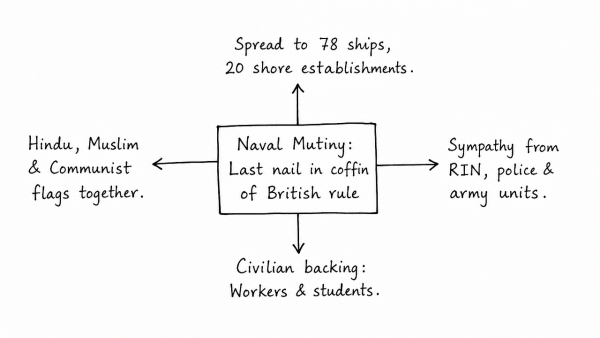
- Military breakdown: The revolt spread from HMIS Talwar to 78 ships and 20 shore establishments, signalling loss of control over the navy.
- Unity against Raj: Hindu, Muslim and Communist flags were raised together, defeating communal divide-and-rule.
- Broader defiance: Sympathy from sections of the Royal Indian Air Force, police and army units showed widening authority crisis.
- Civilian backing: Workers and students in Bombay supported the ratings, paralysing the city and linking military revolt with mass politics.
By revealing the erosion of loyalty in both the armed forces and the public, the mutiny convinced Britain that it could no longer sustain colonial rule in India.
Originally written on
August 29, 2026
and last modified on
September 7, 2026.