In what way do micro-watershed development projects help in water conservation in drought-prone and semi-arid regions of India? (UPSC 2016)
Micro-watershed projects conserve water by treating a small, manageable area, usually 500–1,000 hectares, from ridge to valley. In drought-prone and semi-arid regions, they reduce runoff, improve infiltration and recharge groundwater for local use.
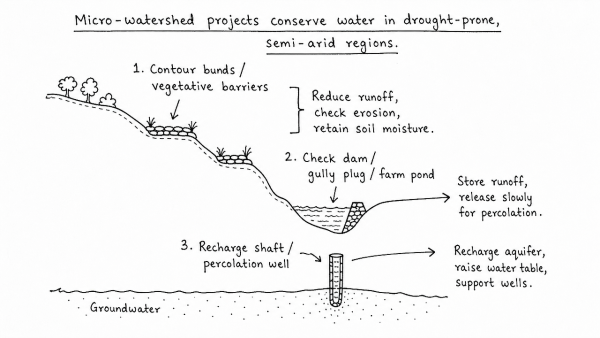
- Soil and moisture conservation: contour bunds, trenches and vegetative barriers slow rainwater flow, cut erosion and keep moisture in the root zone.
- Runoff harvesting: check dams, farm ponds, gully plugs and percolation tanks store monsoon runoff and release it slowly for percolation.
- Aquifer recharge: recharge shafts and wells raise the water table, supporting wells and drinking water in dry months.
- Better land use: afforestation and crop planning reduce demand and improve water-use efficiency.
Thus, micro-watersheds convert erratic rainfall into local water security, strengthen dryland farming and make fragile regions more resilient to drought.
Originally written on
August 30, 2026
and last modified on
August 30, 2026.