In what way could replacement of price subsidy with Direct Benefit Transfer (DBT) change the scenario of subsidies in India? Discuss. (UPSC 2015)
Replacing price subsidy with Direct Benefit Transfer can fundamentally change subsidy policy in India. It shifts support from subsidising goods to supporting people directly, making welfare cleaner, quicker and more targeted.
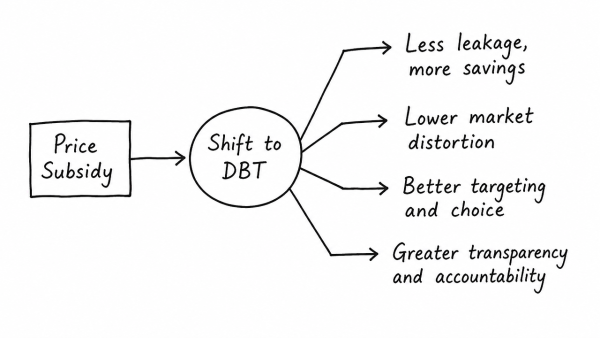
- Less leakage, more savings: DBT cuts middlemen, fake beneficiaries and diversion. It has already helped save large sums by tightening food, LPG, fertilizer and wage subsidies.
- Lower market distortion: Price subsidies often encourage black marketing, hoarding and excess use of inputs. Cash support allows goods to be priced nearer to market levels.
- Better targeting and choice: Beneficiaries can decide what to buy, which improves household autonomy and can raise welfare efficiency.
- Financial inclusion: Direct transfers deepen bank use, digital payments and formal access, especially for rural women.
However, DBT is not a complete substitute in all cases. Inflation, weak banking access and exclusion due to poor digital connectivity can hurt the poorest. Hence, DBT should expand where feasible, while retaining in-kind subsidies for vulnerable groups and remote areas.
Originally written on
August 30, 2026
and last modified on
August 30, 2026.