In the light of the Satyam Scandal (2009), discuss the changes brought in corporate governance to ensure transparency, accountability. (UPSC 2015)
The Satyam scandal exposed weak boards, compromised auditors and poor disclosure, prompting major reforms to strengthen transparency, accountability and investor protection.
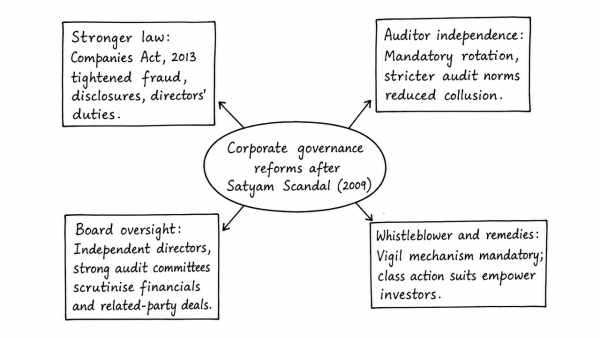
- Stronger law: The Companies Act, 2013 tightened provisions on fraud, disclosures and directors’ duties.
- Auditor independence: Mandatory auditor rotation and stricter audit norms reduced collusion with management.
- Board oversight: Independent directors now have clearer eligibility, fixed tenure and defined responsibilities; audit committees with a majority of independent directors scrutinise financial statements and related-party transactions.
- Whistleblower and remedies: Listed companies must have a vigil mechanism, and class action suits empower shareholders and depositors against fraud and misleading statements.
- Regulatory oversight: NFRA was created to improve audit quality, while SEBI strengthened listing and disclosure requirements.
These reforms have improved governance, but their impact depends on strict enforcement, ethical leadership and active board supervision.
Originally written on
August 30, 2026
and last modified on
August 30, 2026.