In December 2004, tsunami brought havoc on fourteen countries including India. Discuss the factors responsible for occurrence of tsunami and its effects on life and economy. In the light of guidelines of NDMA (2010), describe the mechanisms for preparedness to reduce the risk during such events. (UPSC 2017)
The 2004 Indian Ocean tsunami, triggered by a massive undersea earthquake near Sumatra, struck India and 13 other countries with little warning.
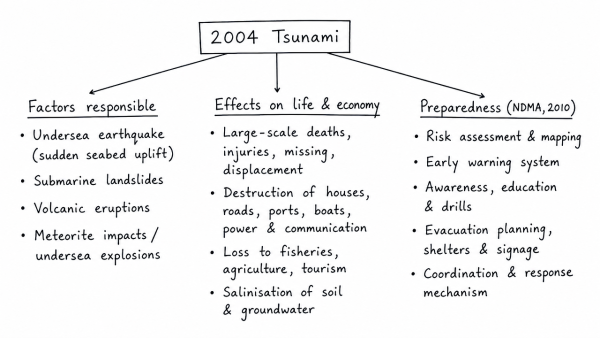
- Factors responsible: Tsunamis are usually caused by sudden vertical displacement of the seabed in subduction-zone megathrust earthquakes; they may also result from submarine landslides, volcanic eruptions, and rarely meteorite impacts or undersea explosions.
- Effects on life and economy: They cause large-scale deaths, injuries, missing persons and displacement; destroy houses, roads, ports, boats, power and communication networks; and severely affect fisheries, agriculture and tourism. Salinisation of soil and groundwater, damage to mangroves/coral reefs, and disease risks further deepen losses.
- Preparedness as per NDMA (2010): Use hazard mapping and coastal zoning; strengthen seismic, tide-gauge and ocean monitoring with rapid alerts; prepare marked evacuation routes, shelters and mock drills; spread awareness of natural warning signs like strong tremors and sea withdrawal; and build institutional readiness through trained local teams, communication backup, tsunami shelters, raised platforms and bioshields such as mangroves and dunes.
Tsunamis cannot be prevented, but their risk can be greatly reduced through early warning, public awareness, planned evacuation and resilient coastal development.
Originally written on
August 31, 2026
and last modified on
August 31, 2026.