In absence of a well-educated and organized local level government system, ‘Panchayats’ and ‘Samitis’ have remained mainly political institutions and not effective instruments of governance. Critically discuss. (UPSC 2015)
Panchayats and Samitis were intended to deepen democracy and local development, but in many states they remain largely political bodies because authority, skills and resources are inadequately devolved.
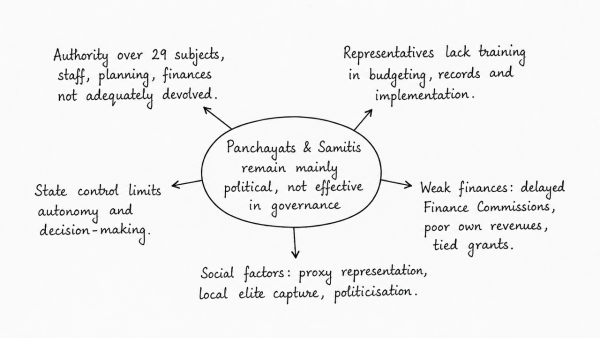
- Why they stay political: Although Article 243G and the Eleventh Schedule list 29 subjects, staff, planning and finances are often controlled by the state, limiting autonomy.
- Capacity gaps: Many representatives lack training in budgeting, records and implementation, so they depend heavily on block officials.
- Fiscal weakness: Delayed State Finance Commissions, poor own revenues and tied grants reduce responsiveness.
- Social factors: Proxy representation, caste and local factionalism weaken accountability and inclusive governance.
However, where devolution, training, digital systems and active Gram Sabhas exist, these institutions improve planning, transparency and service delivery; hence the criticism is largely valid, but strengthening education, fiscal autonomy and functional powers can convert them into effective governance institutions.
Originally written on
August 30, 2026
and last modified on
August 30, 2026.