In a globalized world, Intellectual Property Rights assume significance and are a source of litigation. Broadly distinguish between the terms—Copyrights, Patents and Trade Secrets. (UPSC 2014)
Intellectual property rights protect different kinds of human creativity and business value. In a globalised economy, they matter because they encourage innovation, reward creators and often trigger disputes over ownership, use and profit.
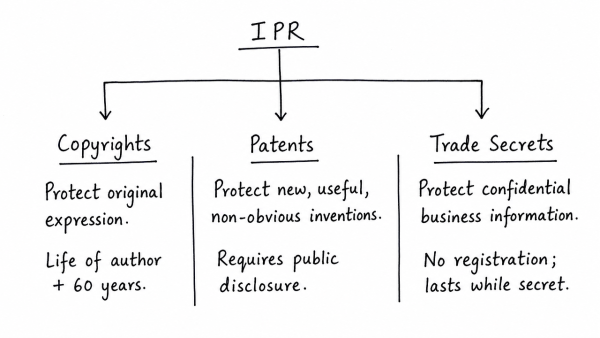
- Copyrights: Protect original expression in books, music, films, art and software. They do not protect ideas, only the way ideas are expressed. Protection arises automatically on creation and usually lasts for the author’s life plus 60 years.
- Patents: Protect new, useful and non-obvious inventions, such as products or processes. The inventor must disclose the invention publicly in return for a temporary monopoly, generally for 20 years.
- Trade Secrets: Protect confidential business information such as formulas, methods, algorithms or customer data. Protection depends on secrecy and reasonable safeguards; it can last indefinitely if secrecy is maintained.
Thus, copyrights protect expression, patents protect inventions, and trade secrets protect valuable confidential know-how. Their differences in disclosure, duration and legal effect make them central to both innovation policy and commercial litigation.
Originally written on
August 29, 2026
and last modified on
August 29, 2026.